Major Arcana Clinical Theme Mapping ACT
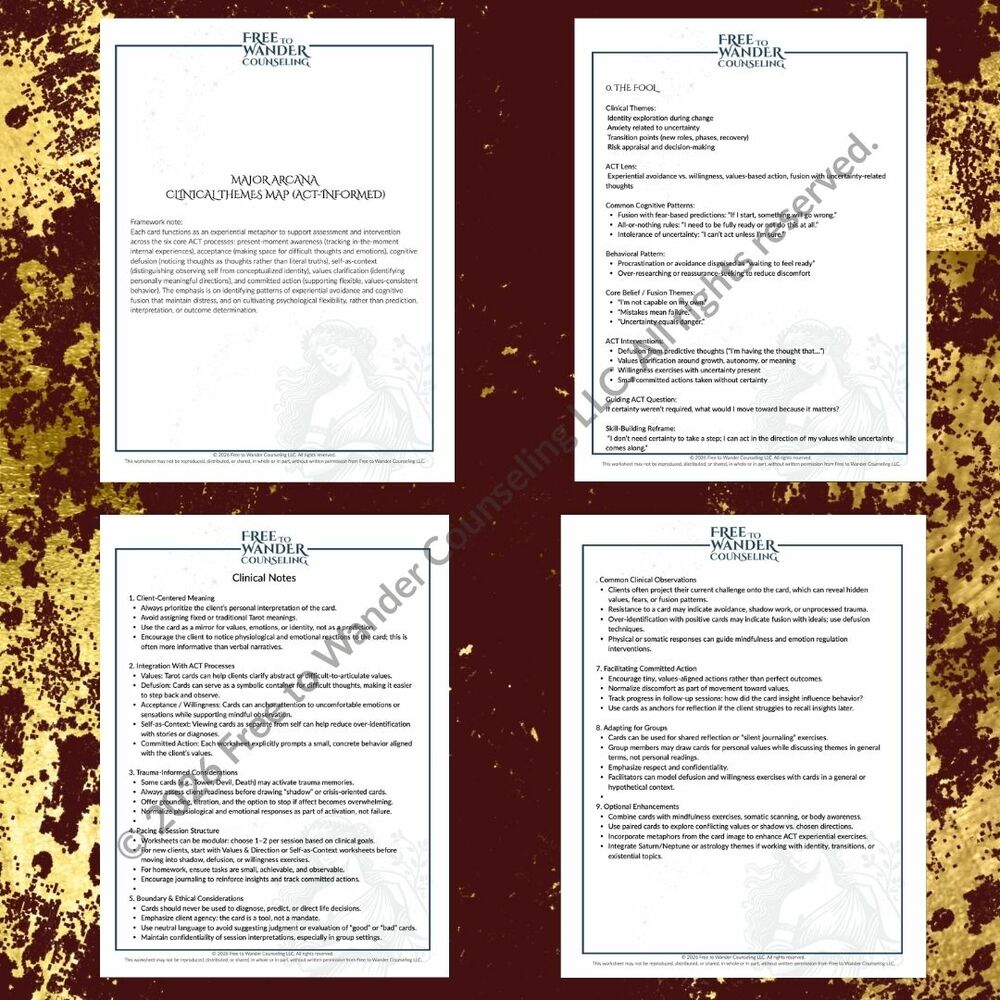
Major Arcana Clinical Themes Map — ACT-Informed | Clinician and Client Framework
A 57-page, ACT-informed clinical framework for therapists who want to use archetypal imagery as an experiential bridge to Acceptance and Commitment Therapy work.
Each of the 22 Major Arcana cards is mapped to ACT clinical themes including cognitive fusion patterns, experiential avoidance, values disconnection, and committed action and formatted as a two-page spread designed for direct clinical use.
Major Arcana Clinical Themes Map — ACT-Informed | Clinician and Client Framework
A 57-page, ACT-informed clinical framework for therapists who want to use archetypal imagery as an experiential bridge to Acceptance and Commitment Therapy work.
Each of the 22 Major Arcana cards is mapped to ACT clinical themes including cognitive fusion patterns, experiential avoidance, values disconnection, and committed action and formatted as a two-page spread designed for direct clinical use.
Page 1 — Clinician Reference The clinical lens for each card: ACT process focus, common fusion patterns, experiential avoidance themes, self-concept material, targeted interventions, a guiding session question, and a defusion or values reframe. Stays with the clinician.
Page 2 — Client Take-Home An accessible, non-clinical page the client takes between sessions. Includes Simmer Questions designed to be answered and revisited over time, journal prompts, and symbolism exploration questions. Written to center the client's own instincts and associations above any framework provided.
Also includes:
- Pull guidance — two methods for selecting a card (intuitive pull and soul pull), with clinical rationale for when to use each
- Sample session setups with step-by-step clinician guidance and sample questions
Designed for clinicians who are already doing ACT-informed work. This framework is not a guide to incorporating tarot as a modality it is a symbolic scaffold that supports the clinical work you are already doing, particularly when a client is plateauing, stuck in a repeated narrative, or disconnected from their felt experience.
Tarot is used here as reflection, never prediction. The card is a starting point. The client is always the authority on their own experience.